

You don’t think about it… until it happens. You call your mom. No answer. You text. Nothing. Then finally you hear back— “Something’s wrong with my phone.” This Isn’t Just a Tech Problem On the surface, it sounds small. But it’s not. How you check on her How she calls for help How she stays connected When her phone stops working, it’s not just inconvenient—it’s isolating. What’s Actually Happening It’s usually not one big issue. It’s a bunch of small things stacking up: Settings getting changed Numbers accidentally blocked Wi-Fi turned off Passwords forgotten or reset Until one day… nothing works the way it should. What You Can Do Right Now Call from a different number Have them restart the phone Check if Wi-Fi is turned on Try video so you can see the screen Sometimes that works. But not always. The Real Problem Even if you fix it today… it’ll probably happen again. Not because they’re careless. But because modern phones are complicated—and one small change can break everything. You Don’t Have to Handle This Alone We help families fix these issues every day—without the stress, confusion, or guesswork. Get Help Now

Long-Distance Caregiving: Supporting Aging Parents From Another City in 2026 January can feel like a fresh start — until the quiet worry shows up: “My parents are getting older… and I don’t live near them.” Here are practical, realistic ways to support them from a distance without burning yourself out. EldersTree Blog · Long-Distance Caregiving & Support The start of a new year often brings reflection. We think about goals, fresh starts, and what we want to change. But for many adult children, January also brings a familiar, quiet worry: “My parents are getting older — and I don’t live near them.” If your mom or dad lives in another city (or state), you’re not alone. Supporting aging parents from afar has its own challenges — but it’s possible with thoughtful planning and the right tools. Start With the Basics Instead of guessing what needs attention, prioritize three key areas: Focus on what matters most: Safety: Falls, driving, medication mistakes Daily life: Appointments, bills, groceries, errands Connection: Loneliness, mood changes, isolation Start with a simple list so you know what needs regular check-ins — and what can wait. Simple systems help you stay connected without stress. Set Easy Check-Ins When you live far away, consistency matters more than long conversations. A weekly check-in call plus a short mid-week message can do wonders. Weekly “life admin” call — appointments, meds, errands Short mid-week check-in — mood, energy, anything unusual Shared notes — so nothing gets forgotten Distance caregiving isn’t about doing everything. It’s about making sure nothing important gets missed. Make Tech Friendlier Tech can help — but only when it’s set up in ways your parents can easily use. Aim for simplicity, not complexity. Helpful tech tools Automatic reminders (meds, appointments) Emergency contact info stored clearly One-tap video calling apps Support doesn’t need to be close to be meaningful. When to Consider Extra Help If safety concerns, missed appointments, or loneliness are becoming constant patterns, it may be time for local support — not because you’ve failed, but because distance has limits. How EldersTree Helps (Even From Afar) EldersTree offers calm, reliable support for aging parents and peace of mind for families. Whether it’s tech setup, remote troubleshooting, check-ins, or gentle guidance, we’re here to help. 👉 Want support for your parents — without the constant worry? We can help your family create a simple plan and provide trusted support where it’s needed most. Get Support with EldersTree
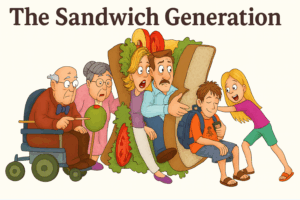
The Sandwich Generation: How to Care for Aging Parents and Kids Without Burning Out Many adults are caring for both children and aging parents at the same time. Here’s how to manage the emotional load — and get the support your family deserves. EldersTree Blog · Family Caregiving & Support What Is the Sandwich Generation? The Sandwich Generation describes adults who are caring for their own children and helping aging parents at the same time. For many families, this dual role happens suddenly — one moment you’re attending school events, and the next you’re explaining medical instructions to your parents. If this sounds familiar, you’re not alone. Today, more than 1 in 7 adults in the U.S. is part of the Sandwich Generation. Signs You’re in the Sandwich Generation You may be part of it if you’re juggling: Pediatric appointments and cardiology visits in the same week Helping kids with homework while troubleshooting your parents’ phones Managing paperwork, medication reminders, and daily life logistics Feeling like “there’s no time left” for yourself These situations don’t mean you’re failing — they mean you’re doing the work of two generations. Why It Feels So Heavy Caring for aging parents and children at the same time places pressure on every part of your life: Emotional strain Shifting into a caregiving role for your parents can feel overwhelming or even surreal. Meanwhile, your children still need structure, love, and time. Financial pressure Childcare, family expenses, and senior care add up quickly. Many adult children feel caught between competing financial priorities. Time scarcity Every day feels like an impossible puzzle — and something always slides to the bottom of the list. It’s not weakness. It’s math. You’re one person doing the jobs of three. How to Cope When You’re Stretched Thin 1. Simplify communication Use shared calendars or apps to coordinate medical appointments, after-school schedules, and reminders effortlessly. 2. Ask for help early — not when you’re exhausted People often wait too long to ask for support, but building a small “care team” makes a huge difference. 3. Outsource where you can Even small tasks — tech setup, phone troubleshooting, scheduling help — lighten your load. 4. Prioritize rest as a task, not a luxury Burnout isn’t sustainable. Start treating rest as a responsibility, not an afterthought. How EldersTree Helps Families Like Yours EldersTree supports aging parents so you can breathe again: Tech help (computer, phone, Wi-Fi, smart home) Remote support Appointments, reminders & scheduling Connection and companionship Ongoing guidance for families You don’t have to do this alone. Your parents deserve support — and so do you. 👉 Want help caring for your parents? Let EldersTree provide calm, reliable support so you can focus on being family, not just the full-time coordinator. Get Support with EldersTree

Tech Help Without Tears: Bridging the Digital Gap Between You and Your Parents Technology should bring us closer, not drive us apart. But for many families, every app download or video call can turn into a misunderstanding—or a meltdown. If you’ve ever tried walking a parent through a tech task over the phone, you know the frustration. The Digital Gap isn’t just about devices—it’s about expectations, patience, and how we communicate. Bridging that gap means more than just solving the problem. It means slowing down, explaining why something matters, and validating the other person’s experience—even if they’re confused. Here’s how to offer tech help without tears (from either party): Speak their language: Skip the jargon. Say ‘tap the blue circle’ instead of ‘click the icon.’ Slow down: Let them write steps down. Repetition builds confidence. Use analogies: Compare new tech to familiar tasks—like calling vs texting, or a paper map vs GPS. Celebrate small wins: Even opening an app on their own is a victory. Every skipped button hides a chance to connect. Tech help isn’t just support—it’s service, and it builds trust. You’re not just teaching skills. You’re showing that their experience matters. And that’s worth every second.

Why Won’t My Mom Click the Link? Why Won’t My Mom Click the Link? – Tech Frustrations for the Sandwich Generation If you’ve ever found yourself repeating the words, “Just click the link, Mom,” only to hear, “Which one? I don’t see it,” then congratulations — you’re part of the Sandwich Generation. Caught between raising kids and supporting aging parents, many adults today are navigating more than just family dynamics — they’re tech support, emotional support, and crisis hotline all in one. When Tech Sparks Tension It’s not just about the tech itself. Each “Which button?” moment sparks tension that echoes something deeper. Technology frustration can open wounds and miscommunication on both sides — the child who’s trying to help and the parent who’s struggling to keep up. Why It Feels So Personal It’s not about the link. It’s about independence. For many parents, asking for help with tech can feel like losing control — like being told they’re old, behind, or dependent. They’re not being hard-headed; they’re afraid, and that emotion deserves space. It’s not just a skipped button. It’s a skipped connection. Tips for the Tech-Supported Stay calm: Don’t match the frustration. Redirect it. Use visuals: Share annotated screenshots or screen recordings. Repeat without resentment: If you’ve said it once, you’ll probably say it again — and that’s okay. Celebrate wins: That emoji reply? That’s progress. 🎉 You’re Not Alone If you’ve helped your mom fix the same email three times or walked your dad through Zoom five Mondays in a row — you’re doing something that matters. At EldersTree, we know that behind every skipped tech step is a missed connection waiting to be rebuilt. Let’s help parents stay independent and connected — without sacrificing your sanity. You’re not alone. You’re part of the village. 🧡

Finding the right caregiver can be overwhelming. Families want someone skilled, trustworthy, and compassionate. Here’s how EldersTree simplifies the process.